
The Counterpoint
SFCV’s weekly think piece on classical music today.


By Annelies Zijderveld, social media manager
The Healing Power of Silkroad
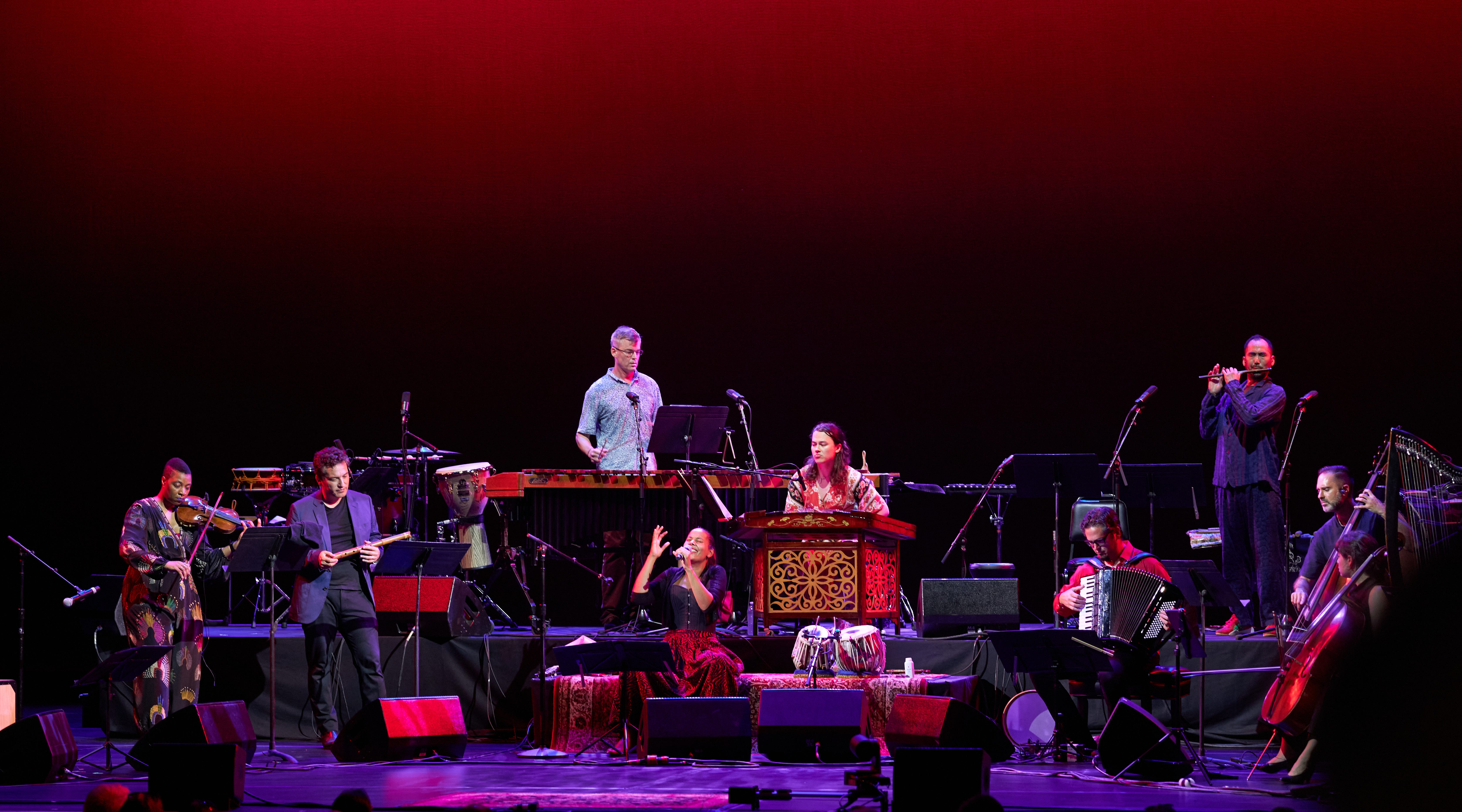
Silkroad Ensemble with Rhiannon Giddens | Credit: Noir Prism
Years ago, uncertain of the future, I rejected resolutions. I opted, instead, for a word to carry into the year like a banner or reminder. “Community” was in the running for this year’s word, then “neighbor,” but in the end “friendship” won out. I wonder if Rhiannon Giddens might agree.
Last month, she and other members of the Silkroad Ensemble started their concert at Cal Performances by walking the aisles from the back of Zellerbach Hall, ushering the audience — hands upraised as they walked — to join them in humming a line of music. The ensemble engrafted the audience into the song as we carried a kind of musical foundation upon which Giddens sang. In reporting how audience members engaged with the music, so many of them called out this collective experience as a favorite moment of the night.
In these tumultuous times, I wonder about the refuge of music, how it can hold our emotions or express them when we can’t release them otherwise. What might it look like to co-regulate together in a live musical experience? This is a question I’ve been mulling for the past year.
Entitled “Sanctuary: The Power of Resonance and Ritual,” the Silkroad Ensemble concert felt so necessary and right in the moment of its arrival. In reporting audience sentiment, attendees kept telling me about looking for solace — asking if joy is even possible. And yet the merrymaking coming from the stage, where the musicians led songs in open-ended improvisations in which other Silkroad Ensemble members joined, adding their instrument’s reply, told us that yes, even now, joy is possible.
But joy comes at a cost. Sanctuary does too. After the concert and at the end of the post-concert conversation with UC Berkeley Associate Professor of Ethnomusicology, Marié Abe, Giddens proclaimed to the sparse assemblage of attendees, words that stung but held truth.
“There are a percentage of musicians on this stage who flew here — who flew here — over the ocean, who are from places that the United States is actively bombing — who flew here to offer you sanctuary.”
She challenged us in the manner of a prophetess: “These kinds of experiences have to be a beginning of something new.” In other words, you paid to listen to us perform for you — to invite you in to experience sanctuary with us. Now, pay it forward. What can that look like? She suggested talking to your neighbors, for one, asking them what songs they remember from when they were children. “That’s a radical act,” Giddens said. One that presupposes that we know our neighbor’s names. One that leads to the question: “Who is my neighbor?” And maybe, a trickier question, “To whom will we offer sanctuary and healing?”
I exited the concert hall and was about to head to my car when I saw a few more audience members waiting outside. One of them happened to be Dr. Angela Wellman, founder of the Oakland Public Conservatory of Music. Silkroad Ensemble had already brought this message and mission of music as sanctuary into her community ahead of the Cal Performances concerts. Instead of being siloed away, the Ensemble musicians made their commitment real in Oakland. That’s powerful.
“If there’s anything tonight that made you feel, then continue that feeling to someone else near you, that’s in your neighborhood, that’s in your community,” said Giddens. “The time to feel good and go back to what you were doing before is over. It’s over.”
Back to my word of the year, friendship, friend — how is this word so different from neighbor or from community? How might the way we relate to one another be different if we were indeed friends first … or friends eventually, even if there is work involved to shift our thinking. On that warm March evening in Berkeley, I walked down Bancroft Avenue, chewing on this idea of how live music can change us for the better — and how we can pay that forward, perhaps especially in sanctuary cities.
On Repeat
What we’re listening to
By Simon Cohen, assistant editor
Michael Tilson Thomas’s legacy as a conductor, composer, and recording artist was enormous. I put this playlist together as a celebration of that legacy, drawing from his recordings with the San Francisco Symphony as well as several of his own compositions. It ranges from West Side Story’s “Somewhere” — a dream of a better place, written by his close friend and mentor Leonard Bernstein — through the American music he championed to the orchestral works he led with his signature clarity, charisma, and vitality.